the engine · how work flows
One job card, every bench
Register a project once. Plan it in phases and tasks with real dependencies. Then, whenever anyone — a person, a Claude Code session, a Codex run, an n8n flow — picks a card up, the hall compiles everything they need into one document: the task, the project, its charter, the linked reports, the skills they are allowed. Put the card down in one harness and pick it up in another; the context comes with you, and your team sees the same board.
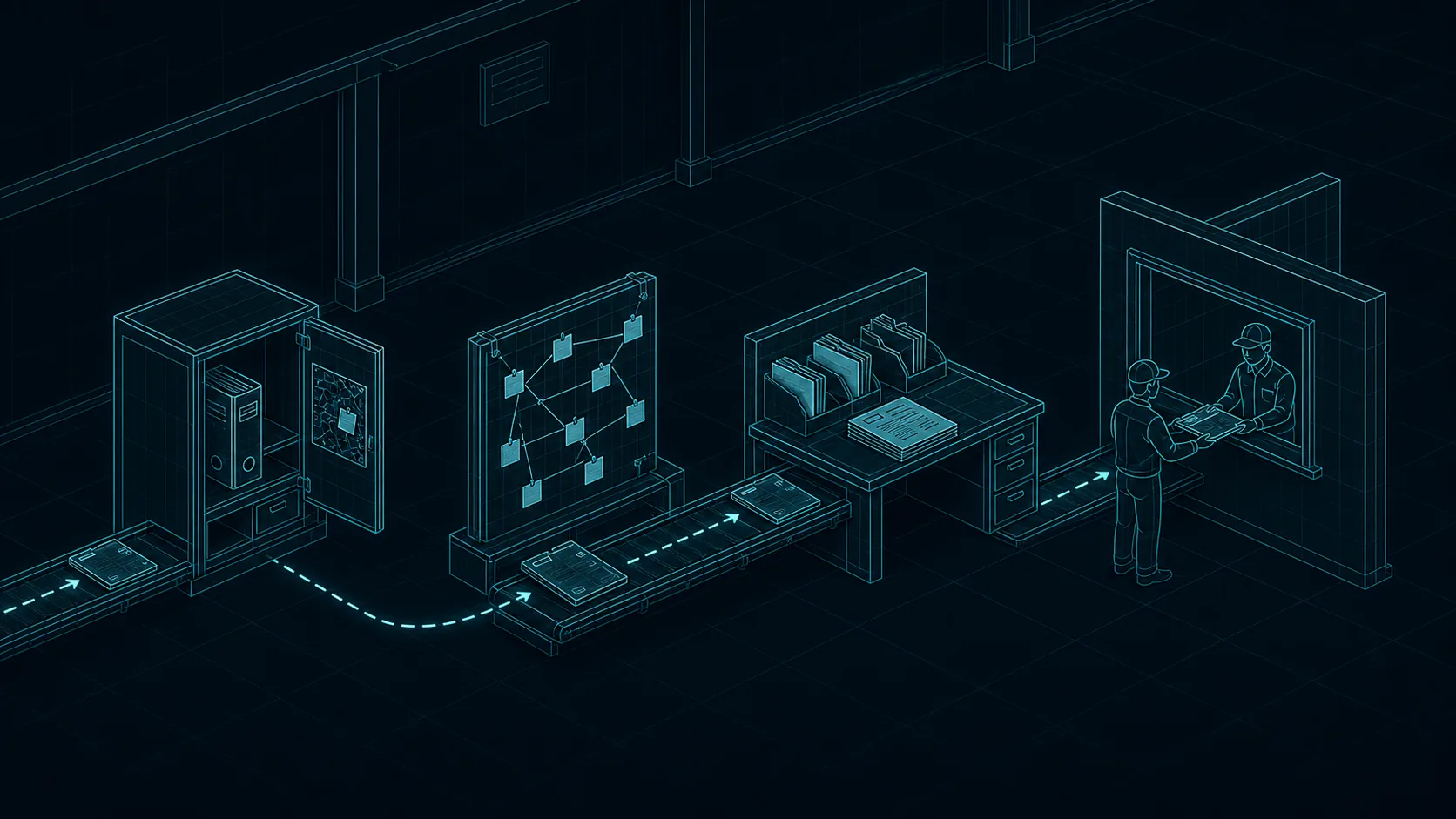
Register the project
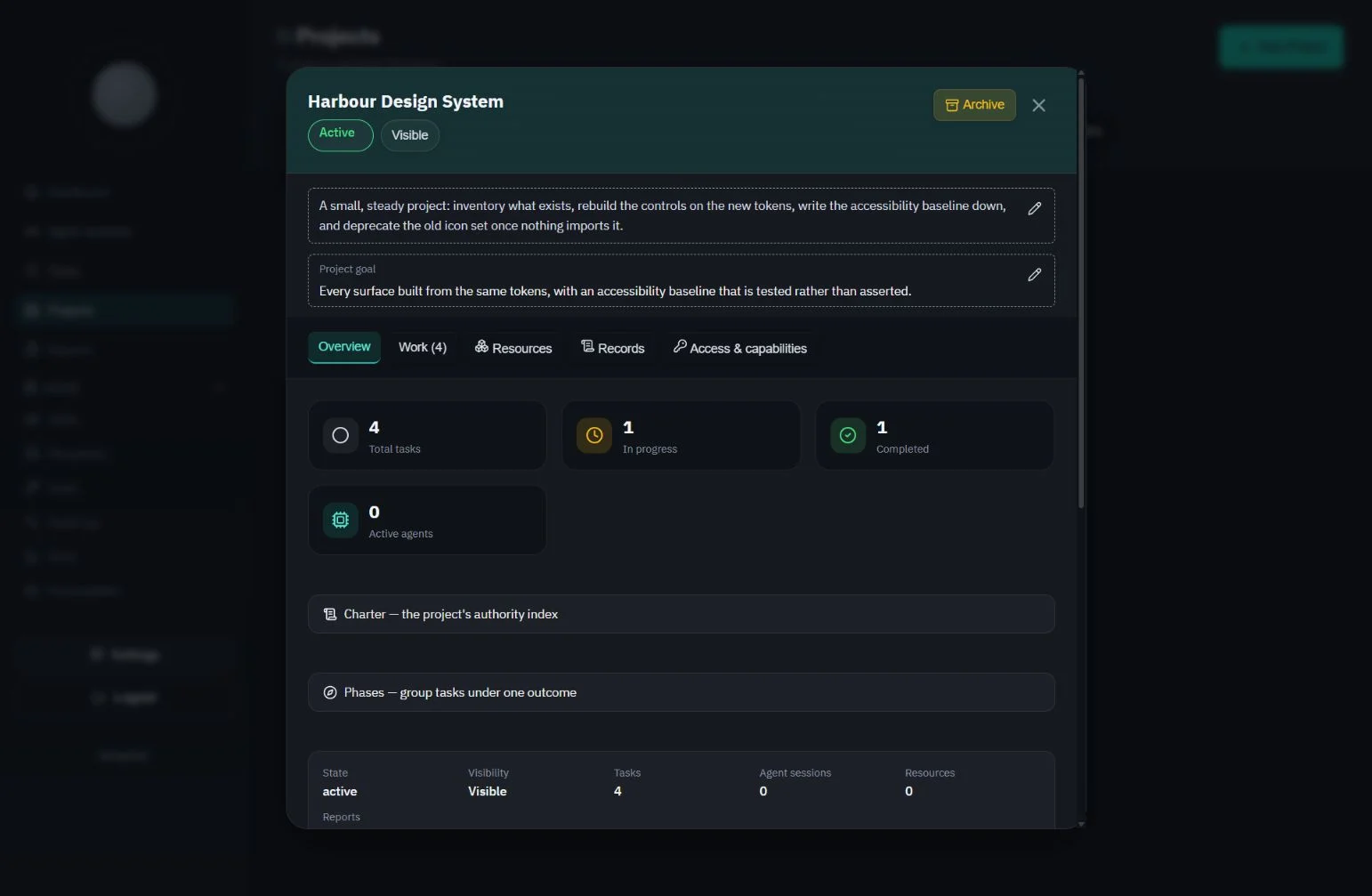
Everything starts as a project on the board — the high-level facts a newcomer needs before touching anything, kept in one place and served into every job card.
Name and description
What the project is, in the words the next person will read first.
Charter
The project’s authority index: which agreements govern it, what wins on conflict, the standing rules. Included in every job card automatically.
Resources
Exactly four kinds — repository, environment, workspace, reference — replaced atomically, with revision checks so nobody overwrites a colleague’s change.
Links and reports
Every report filed against any task in the project is listed at the project level too. The project is the shelf; the tasks are the folders on it.
Plan it in phases and tasks
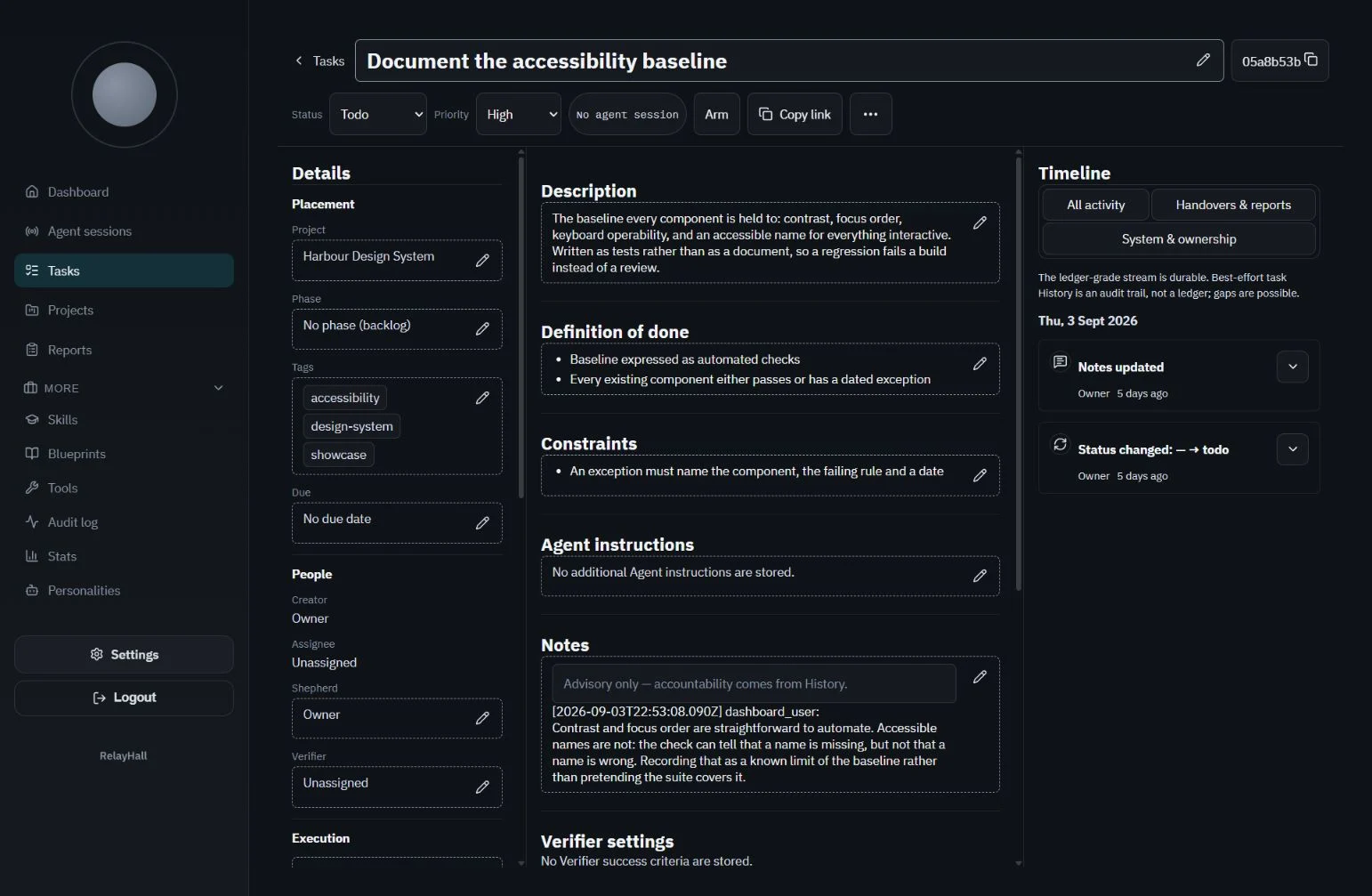
The kanban is the face; underneath it is a dependency graph with a history. Work sessions, handovers and reports attach to the card they belong to and roll up to the project.
Tasks
The job cards: subtasks, references, an explicit review-or-stuck lifecycle, and subtask completion owned by the verifier, not the worker.
Phases
Tasks grouped under one outcome. A phase has a goal and its own brief, so a worker knows not just what to do but what it is for.
Dependencies
Cards wait on cards. A task becomes ready only when it is armed and everything it depends on is done — and the board says so, rather than a human remembering.
The task stream
Who claimed it, under which badge, what they handed over, which reports they attached — the full history stays on the card.
You rarely draw this by hand — a Blueprint instantiates the whole structure
Pick it up, and the card is already written
At pickup the hall compiles a Brief: one machine-readable document with everything the worker or orchestrator needs — over the API and MCP as structured data, over the CLI as text. It is scoped to the credential — the badge — that asked for it, and compiling it executes nothing.
two words, one card: the task is the job card pinned on the board; the brief is the compiled card the worker actually reads.
task title, status, phase, dependencies, references, execution options project name, description, the four resources charter the governing agreements, verbatim personality the role the worker should adopt — tone, standards, what it must refuse skills the instruction entries this project and this badge are allowed reports the linked reports and handovers — rationale, not just output audience what this badge may see; anything else is simply not in the card illustrative shape — the exact document is served by the api and the mcp tool relayhall_brief_compile
The card carries the project’s charter and resources, the phase’s goal, the personality the worker should act as, the skills this project and this badge are allowed, and the linked reports — including the handovers of whoever held the card before, with their rationale and open questions, not just their output.
Nothing in it is ambient. If a badge may not see a report, the report is not in the card. That is what lets a specialist agent in a governed sandbox and a person at a laptop pick up the same task and receive exactly what each is entitled to.
The context follows you
Start a task in Claude Code at your desk, continue it in Codex on the train, hand it to a colleague’s Gemini CLI or to a production line of specialist agents. It is the same card, the same brief, the same history — because none of it lives in any one harness.
Between harnesses
Models work best in the harnesses built for them, and the best one changes every quarter. The hall keeps the coordination layer stable so switching costs nothing but a badge.
Between people
Your team sees the same board, the same reports, the same task history. A handover is a report with structure — decisions, assumptions, what was rejected, what is unresolved — not a Slack thread to scroll.
Between shifts
The night shift’s agents write the logbook the day shift reads. Every hop is recorded: who ran, under which badge, with what evidence.
Hand back, get stamped, move on
A task ends with a report, not a message. The verifier is a different principal from the claimant by rule; owner-gated actions stay blocked until a human approves; and the report joins the project shelf for the next card to cite.
Write the first card
Stand up a shed, register a project, and hand an agent its first job card.