the warehouse · knowledge plane · broker core in the public beta
One door to all your shelves
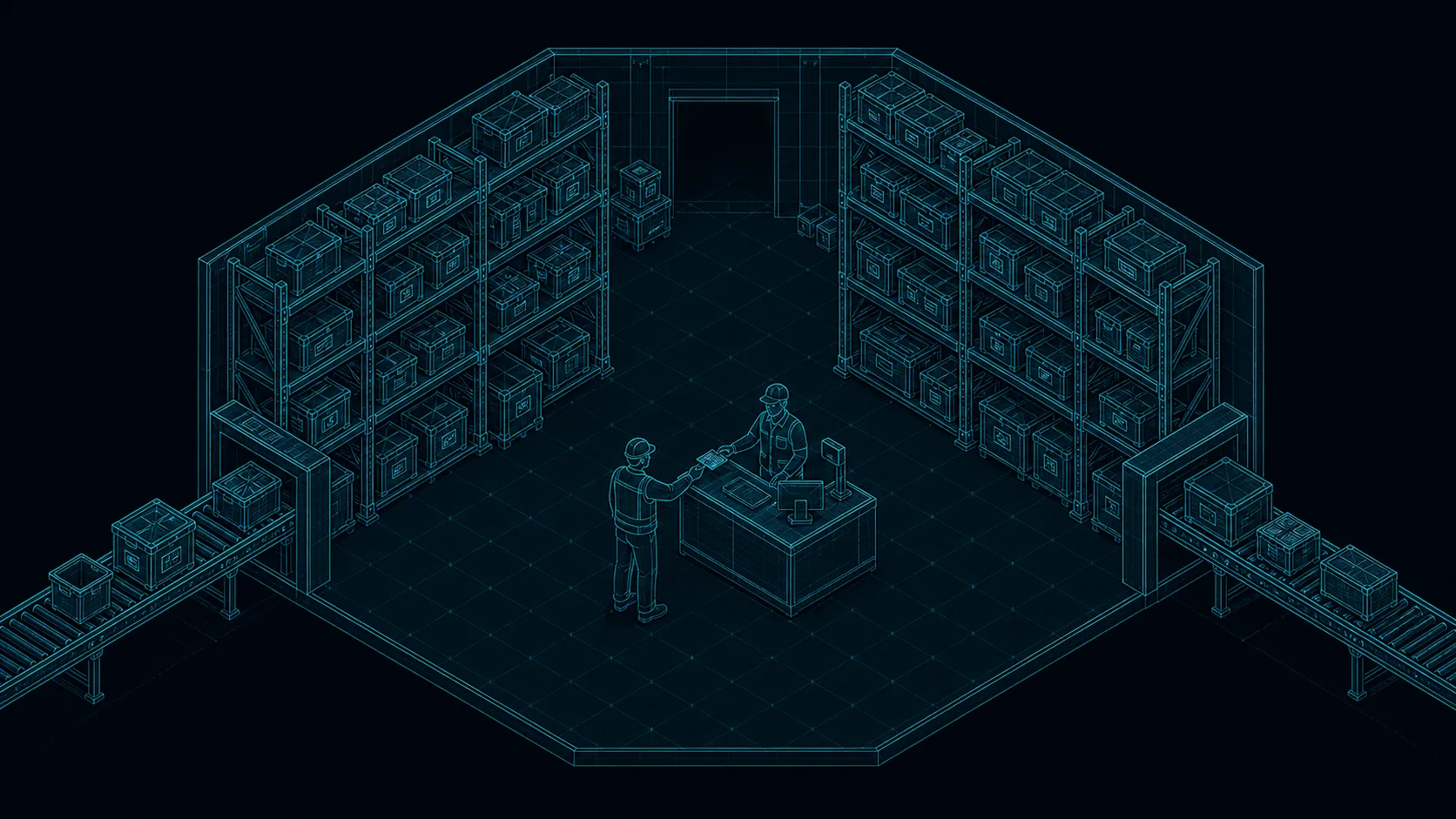
Agents need context, and context is scattered across wikis, tickets, repositories, runbooks and the reports of everyone who worked before them. The warehouse design gives every badge — every credential the gate issued — one governed door to all of it: a federated broker that asks your sources on the agent’s behalf with the agent’s exact authority. That federated query path is planned; today the public source provides configuration, outbound policy, signing and sealed handles. The planned door swings both ways: the hall exposes its own reports and handovers as a feed your indexers can digest.
status, honestly: configuration, outbound policy, signing and sealed handles are available for beta testing; federated fan-out queries, coverage records, the hall as a source and the provenance wrapper are planned; compartments per team are designed. this page describes the ratified design; the status per part is above.
Ask once, search everything
Instead of wiring five connectors into every harness and hoping each one respects your permissions, an agent talks to one counter. The broker knows the shelves, knows the badge, and does the asking.
One connector · planned
An agent gets a single MCP connector and asks once. The broker fans the question out to every source its badge may reach and returns the answers with a coverage record: which shelves answered, which did not.
The badge travels with the query
Identity is propagated by token exchange — audience-restricted, never a credential passed through. What an agent can retrieve is exactly what its audience allows, source by source.
Compartments · designed
Sources are registered on the owner plane and grouped into compartments — named sets of shelves a badge may reach. A project’s agents see the project’s shelves; a contractor’s badge sees the contractor’s.
The warehouse keeps nothing
Core never parses, chunks, embeds, indexes or stores your documents. Retrieval engines and ingestion are satellites you attach — your vector store, your search, your RAG stack.
It works both ways
Your sources, through one badge-scoped door
A specialist agent on a production line asks for “the runbook for this host class” and receives the passages its badge may see — from the wiki, from the repository, from last month’s incident report on the board — with content handles, citable references to the passages rather than copies, that it can quote in its own report.
Your reports and handovers, as a feed
Every report, handover and task history the hall accumulates is itself knowledge. The hall exposes it — with the same authority rules — so your own RAG pipeline can ingest, chunk, embed and index it outside the hall, and the next agent finds last quarter’s decisions the same way it finds the wiki.
Bring your own engines
The warehouse is a broker by design, not another database. Attach the retrieval engines you already run — a vector store behind a RAG stack, your wiki’s search, your ticketing system’s API — each as a satellite with its own credential and its own trust posture.
A shed
No warehouse at all. The job card already carries the charter, the linked reports and the allowed skills — for one operator that is usually enough.
A workshop
One or two shelves: the wiki and the repository, plus the hall’s own reports fed back in. Agents stop re-deriving what the team already wrote down.
A works hall
Compartments per team, several engines behind the counter, and the audit trail showing which badge asked which shelf for what.
See the available Blueprint capture and use flow The same disclosure-only pattern, in the designed switchboard, will let a chat agent browse hosts
Give your agents a warehouse
Start with the shed today; the shelves come when you need them.